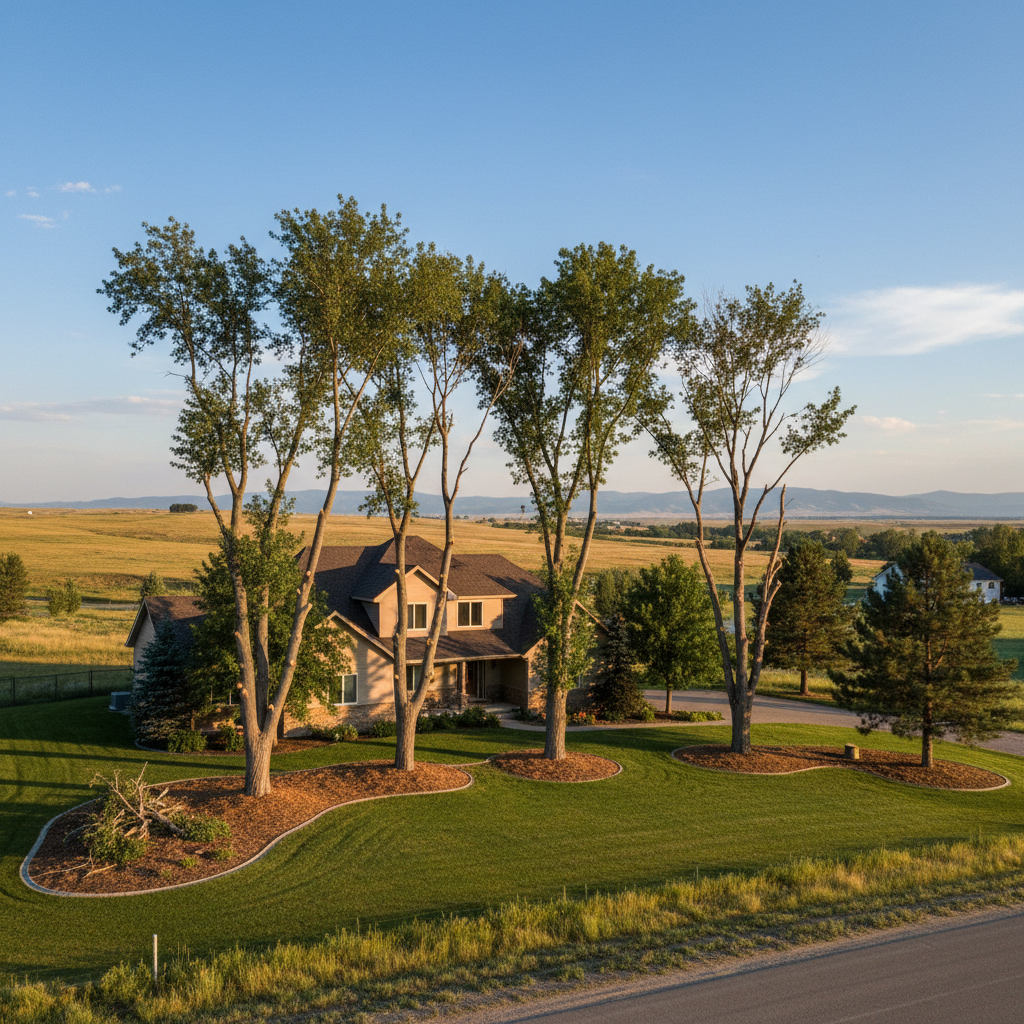
You want your trees to thrive, right? Of course you do. They add shade, beauty, and value to your property. But keeping them healthy around Laurel isn't always as simple as just planting them and walking away. We've got some unique challenges and opportunities here that I've learned about firsthand over years of working with trees in this area.
Understanding Laurel's Environment
First off, let's talk about where we live. Laurel sits right on the Yellowstone River, and that brings some specific conditions. We get those hot, dry summers that can really stress out a tree, especially younger ones or species not well-suited to drought. Then there are our winters, which can be brutal with deep freezes and heavy snow loads. I've seen plenty of branches snap under a foot of wet snow, and that's not just a mess to clean up; it's a wound that can invite disease.
Our soil can also be a mixed bag. Depending on if you're closer to the river, up on the bench, or in one of the older neighborhoods like the ones around Main Street, you might have anything from rich, loamy soil to heavy clay that compacts easily. Clay soil, in particular, can be tough on roots, making it harder for them to get water and nutrients. Plus, it doesn't drain well, which can lead to root rot if you're not careful with watering.
Common Tree Health Issues I See Around Here
I've pretty much seen it all when it comes to what ails trees in Laurel. Here are a few of the big ones:
- Drought Stress: This is huge. Even mature trees can suffer if they don't get enough water during those long, dry spells. You'll see leaves turning yellow or brown prematurely, or even entire branches dying back. Proper watering, especially for young trees, is critical.
- Pests and Diseases: We deal with things like aphids, spider mites, and various fungal issues. Ash trees, for example, are always a concern with emerald ash borer on the horizon (though thankfully not widespread here yet, we need to stay vigilant). I've also seen a lot of cytospora canker on spruce trees, especially those under stress. Keeping an eye out for changes in your tree's leaves or bark can catch these problems early.
- Poor Pruning Practices: This is a big one. I've seen trees 'topped' or cut back incorrectly, which doesn't just look bad; it creates weak points and encourages a flush of weak, fast-growing shoots that are prone to breaking. Proper pruning, done by someone who knows what they're doing, is about promoting good structure and health, not just hacking off branches.
- Soil Compaction: Especially in high-traffic areas or around new construction, compacted soil can choke out roots. This is where aeration or careful mulching can make a real difference.
What You Can Do to Keep Your Trees Happy
You don't need to be an arborist to help your trees, but knowing a few things goes a long way:
Water Wisely: Deep, infrequent watering is usually better than shallow, frequent watering. This encourages roots to grow deeper, making the tree more resilient to drought. For young trees, especially during their first few years, this is non-negotiable.
Mulch, Mulch, Mulch: A good layer of organic mulch (like wood chips, not rocks) around the base of your trees does wonders. It helps retain soil moisture, regulates soil temperature, and suppresses weeds that compete for nutrients. Just keep it a few inches away from the trunk to prevent rot.
Inspect Regularly: Take a walk around your property a few times a year. Look at your trees. Are the leaves a healthy color? Do you see any strange growths, holes, or excessive dead branches? Catching problems early can save a tree.
Prune Correctly (or Hire Someone Who Does): If you're not sure how to prune, don't guess. Bad cuts can do more harm than good. For anything more than small, easily accessible dead branches, it's worth calling in a pro. We know how to make cuts that heal properly and promote a strong, healthy tree structure.
Why Local Expertise Matters
You can read all the general tree care articles you want, but nothing beats local knowledge. Someone who's worked with trees in Laurel for years understands our specific climate, our soil types, and the common pests and diseases that affect trees right here. I've seen how a Ponderosa Pine reacts to a dry summer on the west side of town versus one in the more established, shadier yards near Veterans Park. I know which species tend to struggle here and which ones thrive.
When you call Laurel Tree Solutions, you're not just getting a crew with chainsaws; you're getting someone who understands the local ecosystem and how to best care for your trees in our environment. We're part of this community, and we want to see our trees, and your property, looking their best for years to come.