You ever look at your trees and just wonder, what are they trying to tell me? Or maybe you're scratching your head about why that one spruce isn't looking so hot. I get it. I’ve been working with trees around Laurel for years, and folks ask me the same questions over and over. So, I figured I’d put it all down in one place. No fluff, just what you need to know.
What's the best time to prune my trees in Laurel?
This is probably the most common question I get, and it's a good one because timing is everything. For most deciduous trees – that's your maples, oaks, ash, cottonwoods, you name it – the dormant season is usually best. That means late fall after the leaves drop, or late winter before the buds start swelling. Why then? The tree's not actively growing, so it's less stressed, and you can see the branch structure clearly without all the leaves in the way. Plus, it reduces the risk of disease and insect infestation, which are less active when it's cold.
Now, there are exceptions. If you've got fruit trees, you might do some summer pruning to manage fruit production or shape. And if there's a dead, diseased, or hazardous branch, you don't wait. Get that thing off whenever you notice it. For evergreens like pines and spruces, light pruning can be done almost any time, but heavy pruning is best done in late winter or early spring before the new growth hardens off. Just don't go hacking away at them in mid-summer when they're under heat stress.
How much water do my trees really need, especially with our dry summers?
This is crucial, especially with our hot, dry summers here in Laurel. People often under-water mature trees, thinking they're self-sufficient. They're not, not really, especially if we've had a dry spell or you've got younger trees. The general rule of thumb is about an inch of water per week, either from rain or irrigation. But that's just a starting point.
You need to consider the tree's age, species, and the soil type. Our clay-heavy soils around here, especially in some of the older neighborhoods near Main Street, can hold water well, but they can also get compacted and shed water if it's too dry. Young trees, those planted in the last 2-3 years, need consistent, deep watering to establish a strong root system. I'm talking slow, deep soaks, not just a sprinkle. You want the water to penetrate at least 12-18 inches into the soil. Use a soaker hose or let a regular hose trickle slowly at the base for a few hours. Check the soil moisture with a trowel or even your finger. If it's dry a few inches down, water it.
My tree looks sick. How can I tell what's wrong with it?
That's a tough one because a lot of symptoms can look similar, but they can mean completely different things. Yellowing leaves? Could be overwatering, under-watering, nutrient deficiency, or even a pest. Spots on leaves? Could be a fungal issue. Dieback at the branch tips? Could be drought stress, disease, or insect borers.
The best thing you can do is observe. Look closely. Are there any visible insects? Any strange growths or cankers on the bark? Is it just one branch or the whole tree? Is it happening to all the trees in your yard, or just one species? Sometimes, it's as simple as the tree not getting enough water, or it's planted in a spot where it's not happy. Other times, it's more serious, like emerald ash borer (though we haven't seen widespread issues here yet, it's always a concern for ash trees) or a fungal disease. If you're really stumped, that's when you call someone like me. I can come take a look and give you an honest assessment.
Do I need to fertilize my trees?
Not always, and sometimes, over-fertilizing can do more harm than good. Most healthy, established trees in a decent soil don't need regular fertilization. They get what they need from the soil and decomposing organic matter. Think about trees in a forest – nobody's out there fertilizing them, right?
However, there are times when it makes sense. If your tree is showing signs of nutrient deficiency (like pale, stunted leaves), or if it's struggling after construction, or if it's a young tree you want to give a boost, then a targeted fertilization can help. The key is to get a soil test first. That'll tell you exactly what nutrients are lacking. Otherwise, you're just guessing. If you do fertilize, use a slow-release granular or liquid fertilizer designed for trees, and apply it correctly, usually in the drip line, not right at the trunk. I can help with soil testing and proper application if you're unsure.
What about tree removal? When is it really necessary?
Nobody likes to take down a tree, myself included. But sometimes, it's the safest and smartest thing to do. Here's when I usually recommend it:
- It's dead or dying: A dead tree is a hazard. It's going to fall eventually, and you don't want it falling on your house, car, or a person.
- It's severely diseased or infested: If a disease or pest has taken over and there's no realistic way to save the tree, removing it can prevent the problem from spreading to other healthy trees.
- It's a significant hazard: Maybe it has large, unstable limbs hanging over your house, or it's leaning precariously after a storm. Safety first.
- It's causing structural damage: Roots can sometimes lift foundations, crack driveways, or interfere with utility lines.
- It's outgrown its space: Sometimes a tree was planted too close to a house or other structures and is now causing problems or will in the near future.
Before you decide, get a professional opinion. Sometimes, a good pruning or cabling can save a tree that looks like it's on its way out.
How can I protect my trees from winter damage?
Winter in Laurel can be tough on trees, with those cold snaps, heavy snows, and sometimes even ice. Here's what you can do:
- Water before winter: Give your trees a good, deep watering before the ground freezes solid. This helps them stay hydrated through the dry winter months.
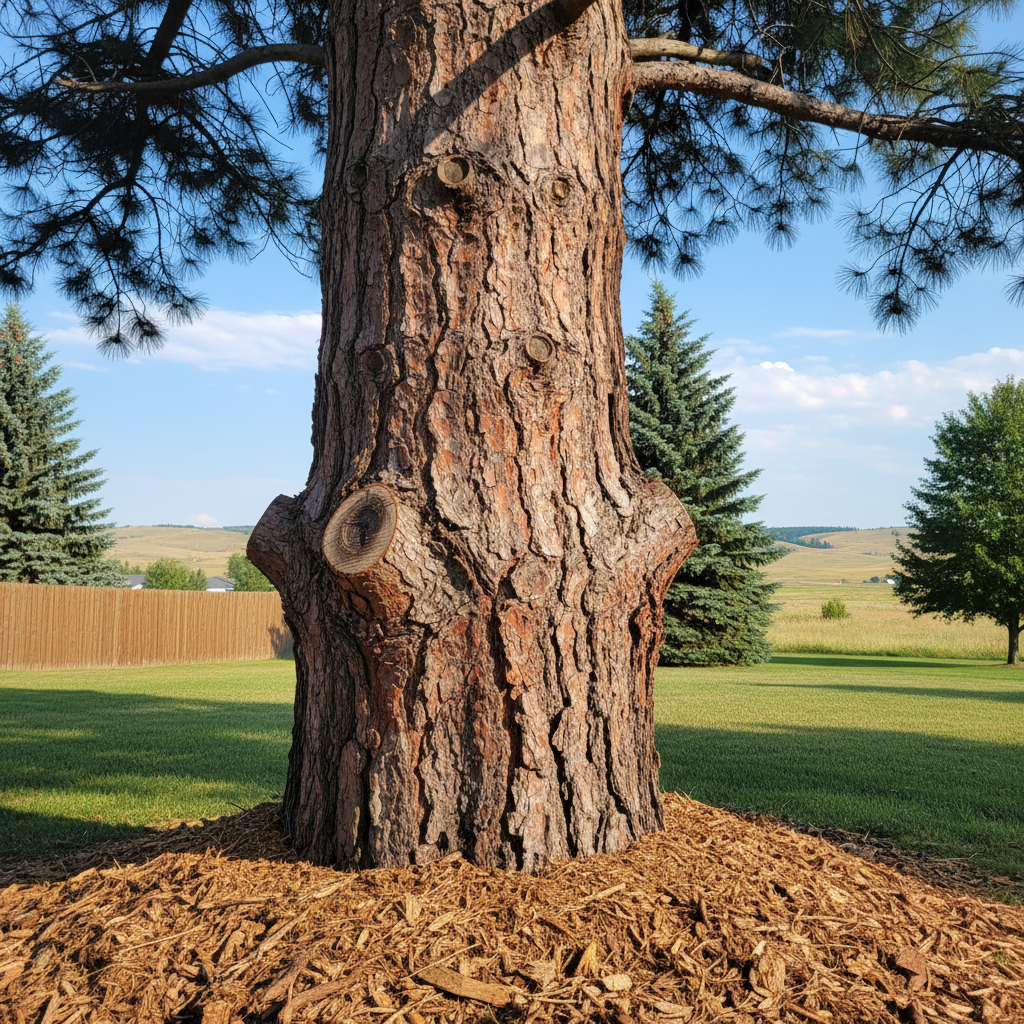
- Mulch: A 2-4 inch layer of organic mulch (like wood chips) around the base of the tree, keeping it a few inches away from the trunk, helps insulate the soil, retain moisture, and regulate soil temperature.
- Protect young trunks: For young trees, wrap the trunk with tree wrap or use a plastic tree guard to prevent sunscald (cracking from temperature fluctuations) and rodent damage.
- Prune strategically: Remove any dead or weak branches in the fall or early winter. These are more likely to break under the weight of snow or ice.
- Shake off heavy snow: If you get a heavy, wet snow, gently brush or shake it off evergreen branches, especially on shrubs and smaller trees, to prevent breakage. Don't try to chip off ice, though – you'll do more harm than good.
Taking these steps can really make a difference in how your trees come through the colder months. We've seen some pretty brutal winters, and a little prep goes a long way. If you've got other questions, or you're looking for help with any of this, you know who to call. Laurel Tree Solutions is always here to lend a hand.